Is Cabinet Refacing Worth it?
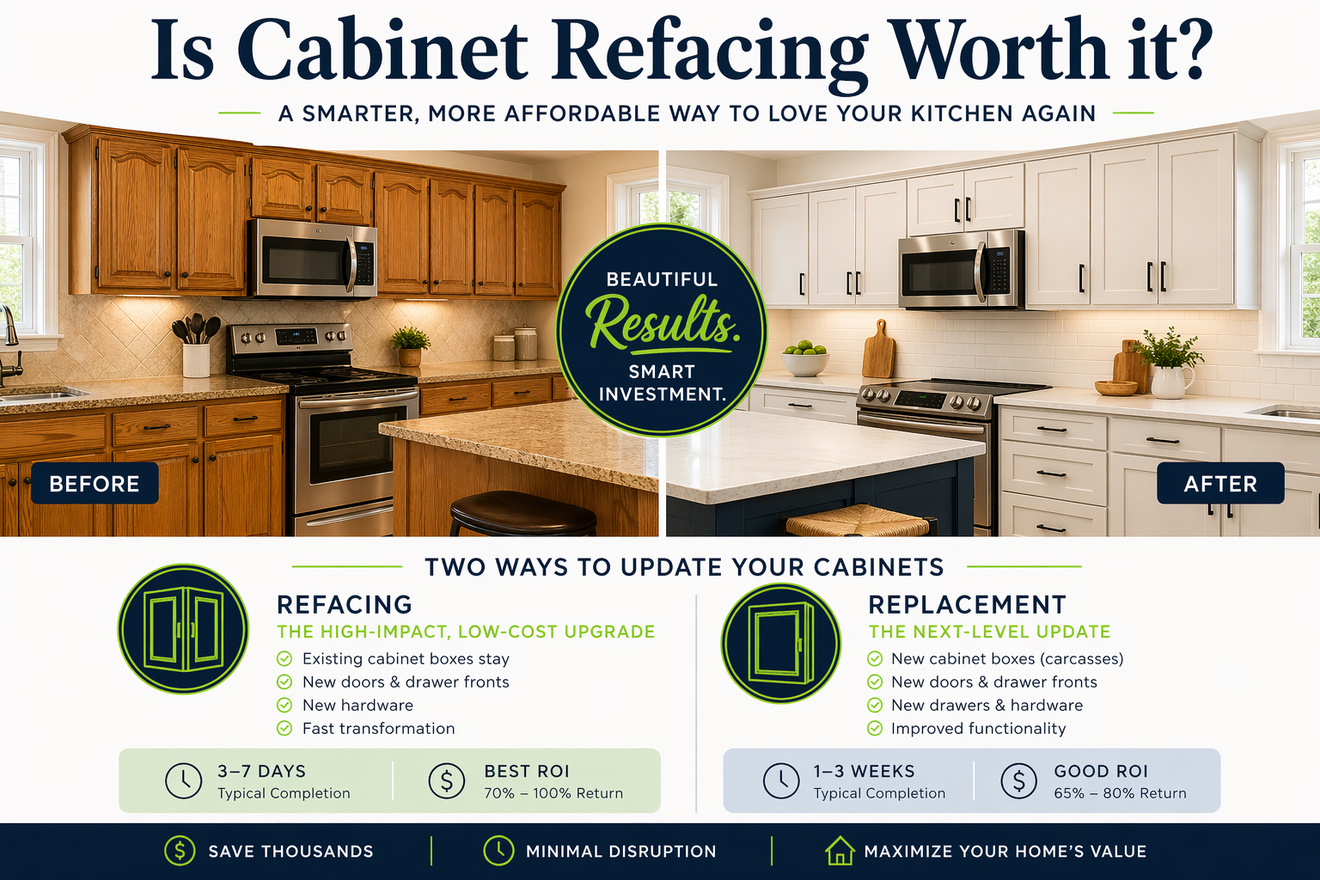
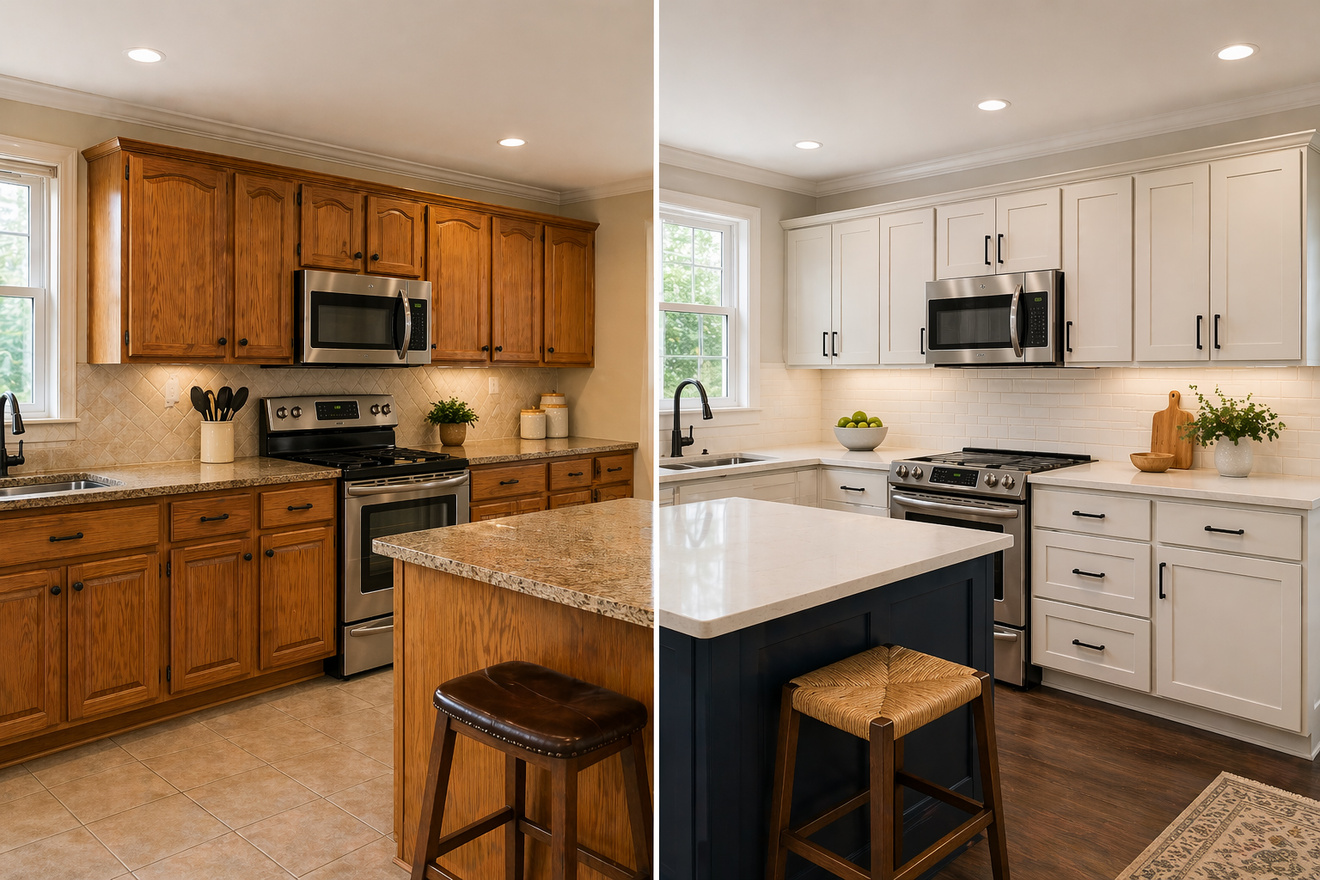
If your cabinets are structurally sound but visually outdated, refacing is often the smartest investment. By updating doors, drawer fronts, and finishes—while keeping the existing boxes—you can achieve a dramatic transformation at a fraction of the cost of replacement.
critical thinking road map to cabinet refacing or replacement
Here's our guide to help you make the best decision
You know you’ve got to do something about those cabinets—They bang like an axe splitting wood when you close them, and the finish/color represents something only morticians would recognize. They honestly look like something out of Frankenstein’s lab.
So, what’s the smart move here? Can it be done professionally for significantly less than outright replacing them? I know I can’t do it myself, or at least shouldn’t.
It really comes down to how many issues or pain points you want or need to solve or can afford to fix, and what parts of the cabinet need to change—doors, pulls, frame, slides, drawers, or some combination?
Precision is always best
Let’s Define Our Terms
Always ask for definitions of what you’re buying when updating the look of your cabinets. Terms like “Painting,” “Refinishing,” “Resurfacing,” and “Replacement” can mean many different things and dramatically different cost implications.
• “Refacing” — Existing cabinet boxes, doors/drawer fronts get sanded, seal-coated, and top-coated with the same or a new color.
• “Replacement” — new drawer fronts and cabinet doors (could be prefinished or not)
• Full replacement or a kitchen remodel — replacement of the entire cabinet structure, doors, drawers, and pulls, often with a change in layout or height.
Ask the hard questions and be honest
Let's think this through
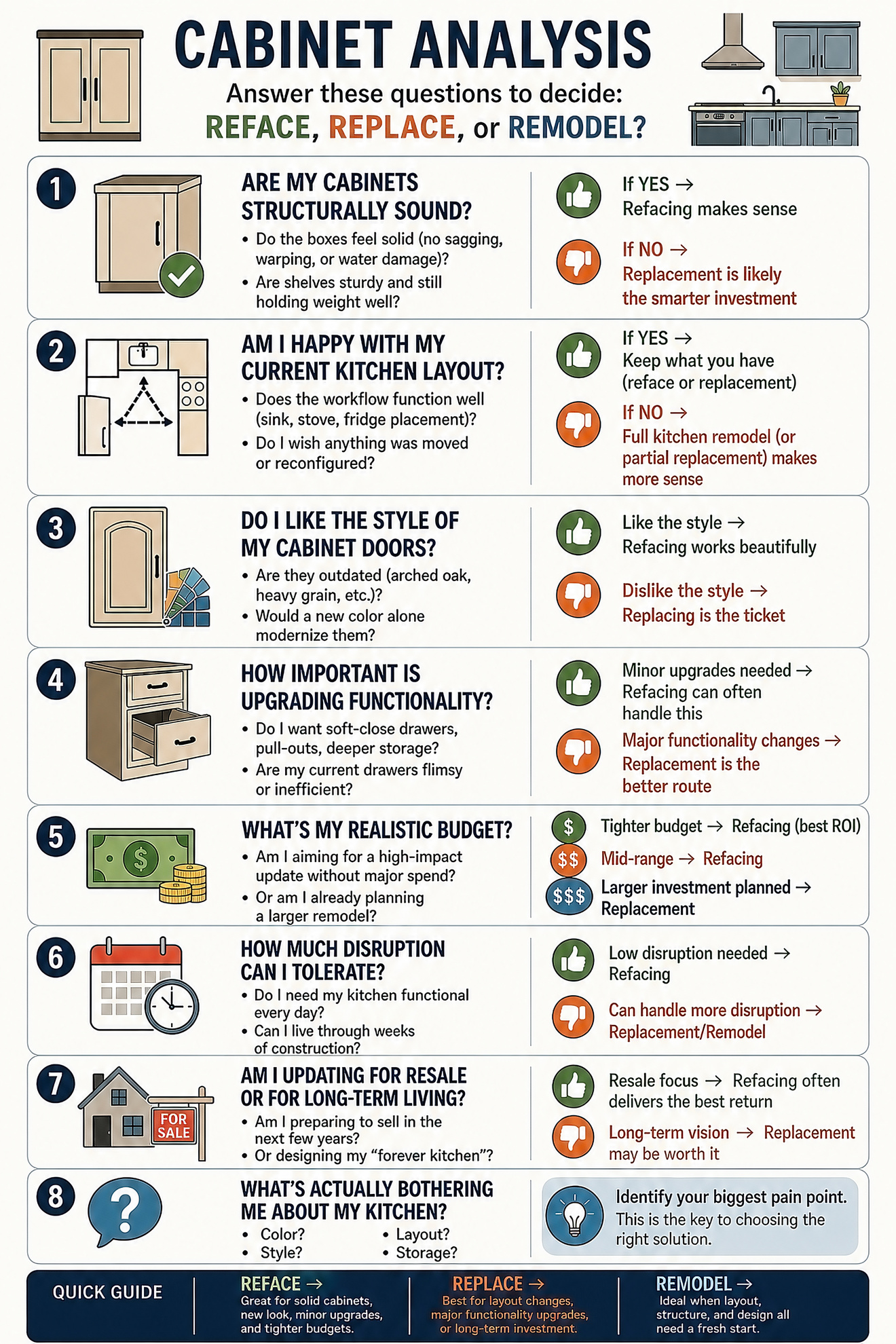
Use this road map of conditions to help make a thorough analysis of whether your situation merits refacing, replacement, or a full kitchen remodel.
Estimates are broader ranges, not specific totals
Refacing Cost Ranges
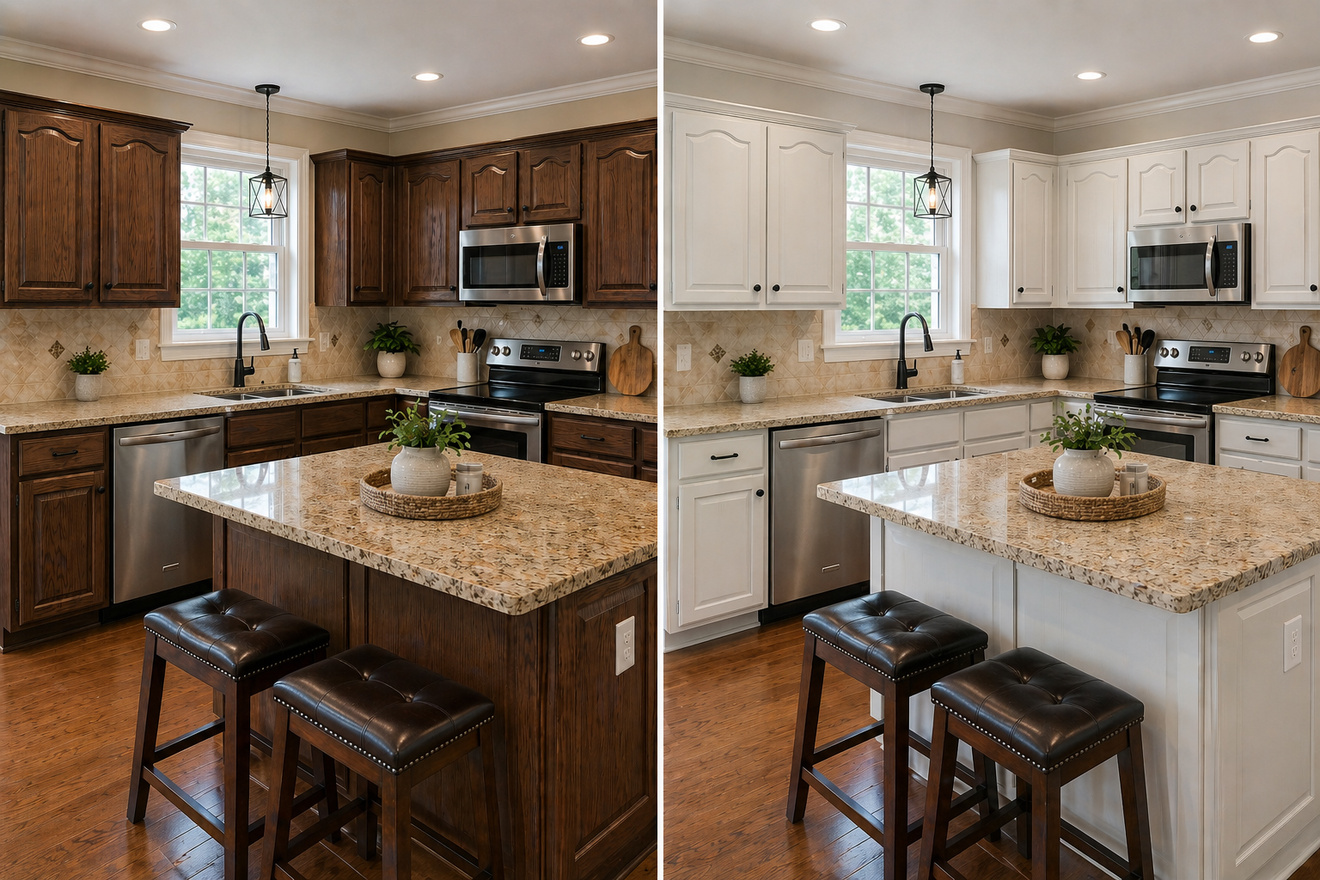
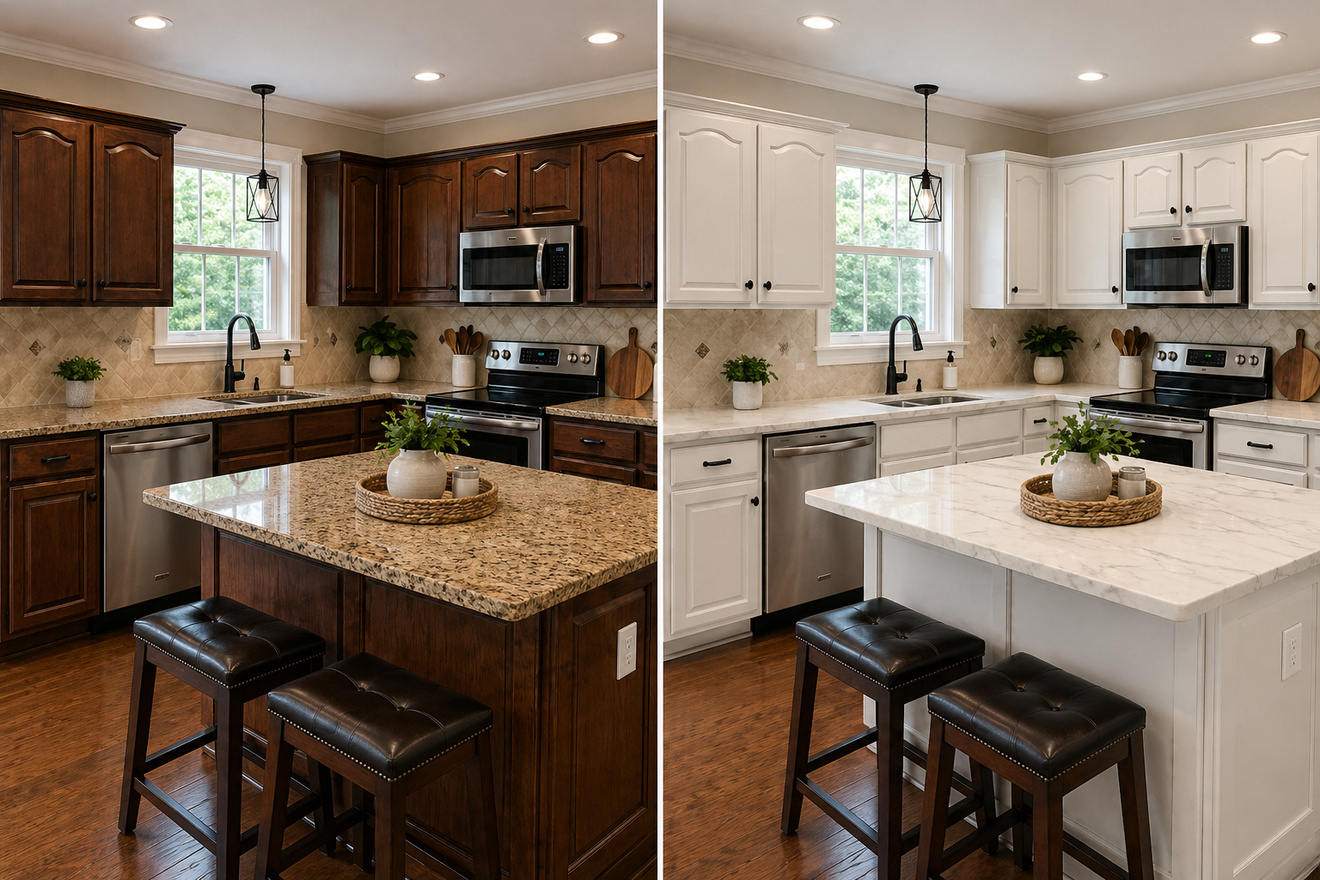
A professional refacing of an average 1980’s kitchen typically ranges from $3,000 to $5,000, while full cabinet door replacement often lands between $6,000 and $10,000 or more. That means refacing can cost as little as 20–30% of replacement, saving homeowners tens of thousands. For many families, that’s the difference between “maybe someday” and “let’s do it this year.”
Cost ranges are not a quote—do not confuse the two
Replacing Cost Ranges
• Full cabinet door/drawer replacement often lands between $6,000 and $10,000 or more, depending on the size of the kitchen and whether you decide to also replace the countertops.
There is a short-term and a long-term aspect to cabinet treatmetns
The Smart Investment
Consider these ROI benefits of addressing your cabinet issues.
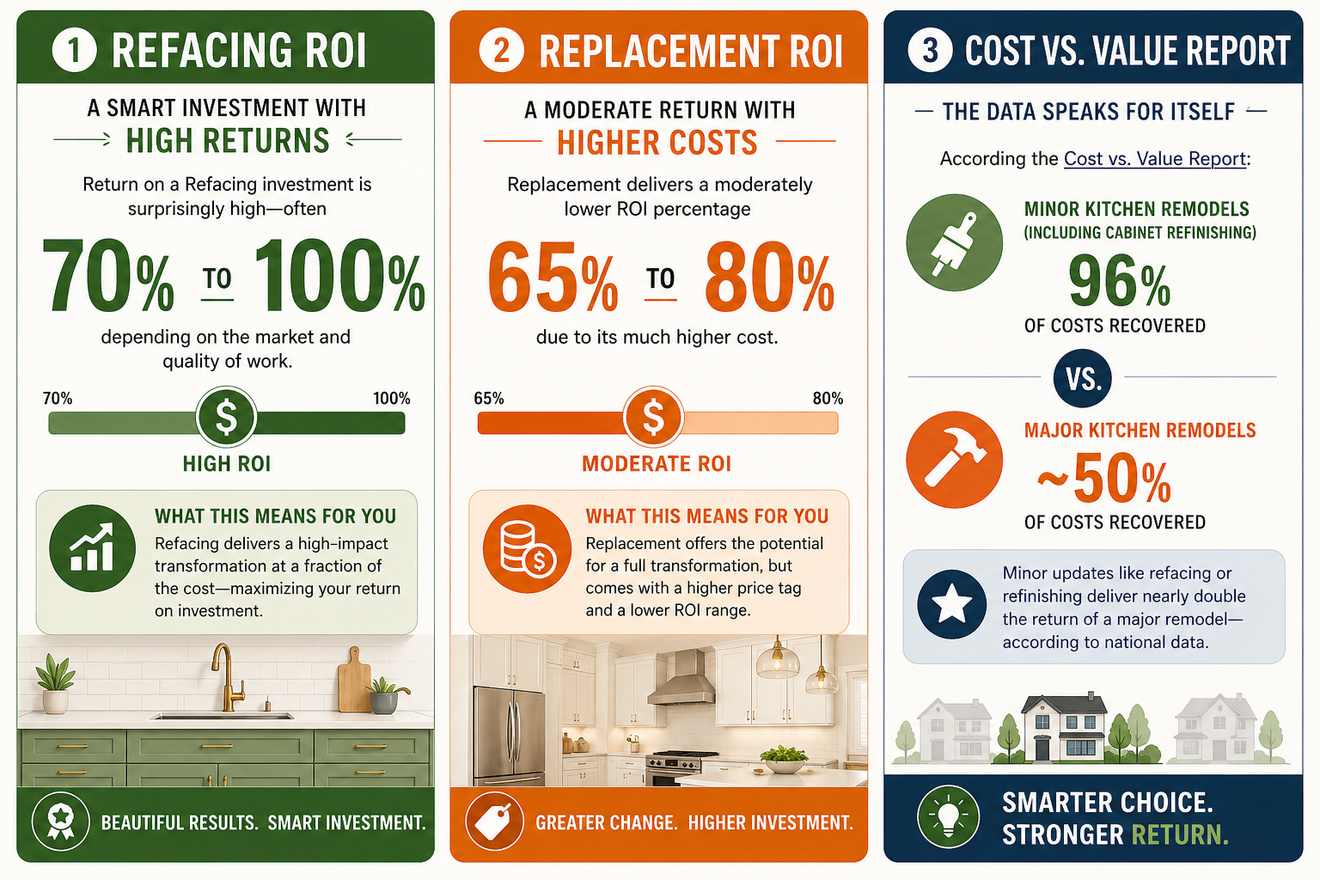
• Return on a Refacing investment is surprisingly high—often 70% to 100% depending on the market and quality of work.
• Replacement delivers a moderately lower ROI percentage, 65% to 80%, due to its much higher cost.
• According to the Cost vs. Value Report, minor kitchen remodels (including cabinet refinishing) recover approximately 96% of costs vs. ~50% for major remodels.
Which is the best fit for you?
Summary Refacing Vs. Replacement
Choose Refacing is the Right Call
- Your cabinet boxes are structurally sound
- You like your current layout
- You want a dramatic visual upgrade without major construction
- You’re preparing to sell and want maximum ROI
In these cases, refacing delivers a “new kitchen feel” at a fraction of the cost—and often buyers can’t tell the difference.
When Replacement Is the Better Call
- Cabinets are warped, damaged, or failing
- You want to change the layout or improve functionality
- Materials are outdated beyond cosmetic repair
- Refacing can transform surfaces—but it won’t fix structural problems.